
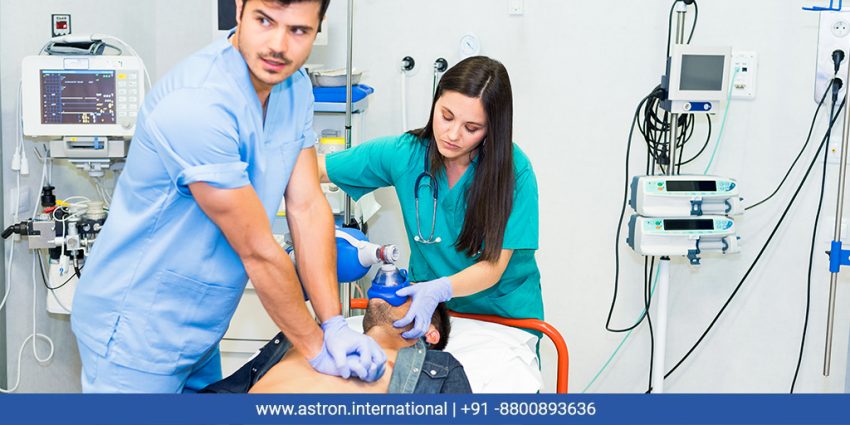
However, in the modern day fast-paced healthcare environment, the role of nurses has grown far beyond what they used to do, which was to treat patients. The demand of highly skilled nurses is at a high point due to the increasing cases of chronic diseases, the rising cases of trauma, and the rising cases of intensive care unit (ICU) demand. To ensure that nurses face these challenges efficiently, critical nursing courses play a critical role in equipping them to do so efficiently. They offer high level training of handling intricate medical situations, handling emergencies promptly, and performing lifesaving procedures. These courses provide the nurses with expertise and practical skills that are specialized in nature, thus leading to better patient outcomes and better healthcare systems in general.
Why Critical Nursing Course is Essential in Today’s Healthcare
Meeting the Growing Demand for Critical Care
The world is witnessing a rising number of patients attending the healthcare system in large quantities seeking emergency and ICU care because of lifestyle diseases, accidents and complex health conditions. General nursing education gives a background and critical nursing training prepares the nurses with the high level of expertise that may be needed in such high stakes scenarios. Critical care nurses are trained on how to operate ventilators, high-tech monitoring systems and emergency procedures that directly affect survival. The critical nursing course equip nurses with the confidence to handle the increasing need and demand of intensive and emergency treatments needed by the patients and at the same time provide timely intervention to the patients, by bridging the gap between basic nursing and special patient care.
Enhancing Patient Safety and Outcomes
Healthcare is based on patient safety, and critical nursing courses are meant to empower it. What matters in emergencies is each second and nurses have to be precise and fast. These programs equip nurses with skills to evaluate patients quickly, stabilize patients, check vital signs and apply advanced life support measures. With evidence-based knowledge, nurses are able to make fast, informed choices and avoid complications, minimise risks, and improve the survival rates. Critical nursing education enables nurses to be essential sources of healthcare quality and patient satisfaction by enhancing emergency response, decreasing ICU mortality, and improving the overall recovery rates, thereby guaranteeing that the nurses will stand as the irreplaceable assets of healthcare excellence and patient-focused care.
Specialized Skill Development
Acquiring higher-level, practical skills that go beyond common nursing is the overall objective of critical nursing programs. Critical skills in advanced life support, for example, CPR and management of the airway, are instructed to nurses and play a significant role in times of crises. In an effort to save lives, they also learn how to make critical decisions under stress. It focuses on competency with state-of-the-art medical equipment like heart monitors, infusion pumps, and ventilators. Significant training areas also involve management of post-surgical or trauma patients and infection control in intensive care units. Nurses are able to excel in complex, high-pressure medical environments due to this specific skill acquisition.
Supporting Doctors and Multidisciplinary Teams
Physicians, anaesthesiologists, surgeons, and nurses collaborate in critical care, with nurses frequently acting as the foundation of this teamwork. Nurses with critical nursing course can help with emergency procedures, anticipate medical needs, and give real-time patient data that is crucial for clinical decision-making. Critical care nurses reduce physicians’ workloads and directly contribute to better patient outcomes by being knowledgeable about sophisticated protocols and providing proactive support. In order to save lives, nurses and interdisciplinary teams must work together.
Conclusion
Critical nursing course is no longer optional, it is a necessity in today’s healthcare system. These programs improve patient care and survival rates by giving nurses high-level clinical skills, decision-making capabilities, and the assurance to operate in stressful settings. Astron International equips nurses with skilled faculty, internationally-known modules, and real-world exposure to be able to offer safe, effective and compassionate care in critical environments.