
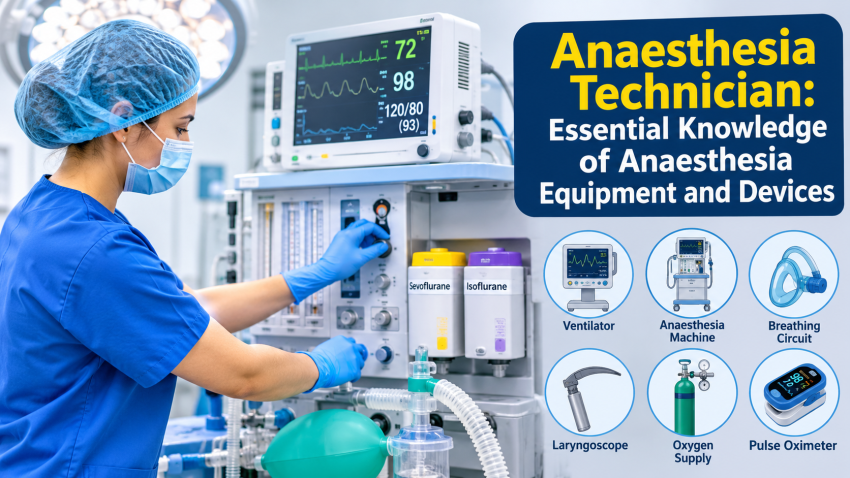
Effective preparation and communication by health professionals are important in ensuring safety in surgical procedures. The anaesthesia equipment is very important because it helps in administering the anesthesia to the patients. An anaesthesia technician contributes to this by preparing the equipment, testing it for proper operation and helping the clinical staff as needed following the established procedures. It is an important part of knowledge needed to work in an operating room to understand these devices.
Understanding Anaesthesia Equipment and Its Purpose
Anaesthetic equipment aids in the delivery of anaesthetic agents, the maintenance of adequate respiration and the monitoring of vital functions during surgery. It is important for technicians to know the use of commonly-used devices and to adhere to the manufacturer’s recommendations and hospital policies regarding their safe use.
One of the vital equipment in an operating room is the anaesthesia workstation. Usually includes gas delivery systems, breathing circuits, ventilator functions and monitoring. Technicians can help prepare equipment for a procedure and perform pre-specified tests before the procedure to look for leaks, faults, or other issues that could impact the procedure’s performance.
Essential Devices Every Anaesthesia Technician Should Know
An anaesthesia technician must know various kinds of equipment that is used during surgery.
Anaesthesia machines: These workstations are responsible for providing controlled gas mixtures and anaesthetic agents. The technicians need to have knowledge about the components involved and the significance of pre-use checks.
Breathing circuits: This includes a set of components which facilitate the movement of gases from the anesthesia workstation to the patient. Pre-use checks need to be done to ensure the safety of connection and presence of any visible damage.
Monitoring devices: The multi-parameter monitors give the readings regarding the vital parameters such as blood pressure, heart rate and oxygen saturation. Various additional measures of monitoring are required depending on the patients condition.
Equipment for airway management: These include face masks, laryngoscopes, endotracheal tubes and other components of airway management. The technicians assist by providing the availability and readiness of the equipment.
Suction equipment: Suction equipment used to remove secretions and fluid when indicated. Readiness and availability need to be ensured before procedures.
Emergency equipment: The emergency equipment such as the resuscitation equipment need to be readily available and up to date with the hospital guidelines.
The Importance of Equipment Checks and Maintenance
In surgery, failure of any equipment poses a great risk. Therefore, the technician specialist, who performs anaesthesia, must be aware of the significance of systematic inspections, routine checks and fault reporting.
Prior to a procedure, checks could include ensuring connections are correct, checking the integrity of the breathing circuit, checking that the monitors are in good working order, and ensuring that necessary supplies are ready. A specific checklist will depend on device, manufacturer and hospital policy.
Technicians can also be involved in cleaning, disinfecting, storing and coordination of maintenance. Equipment is to be processed to meet intended use requirements and the appropriate infection prevention protocols. Any malfunctions of the equipment should be reported and handled by following the proper protocol, not without proper clearance.
How Training Prepares Technicians for Clinical Responsibilities
Structured anaesthesia technician courses can give students insight into components of equipment, anaesthesia room protocols, basics of patient monitoring, and infection control. It is very useful for the students to get experience with the devices before helping others in clinical situations, through practical sessions under qualified supervision.
Students need to check out the curriculum, lab facilities, supervised clinical exposure, eligibility criteria and relevant recognition requirements while selecting a programme. Communication, documentation and the limits of the technician’s role should also be stressed at the training.
Conclusion
An anaesthesia technician’s job involves a variety of responsibilities, and knowledge of anaesthetic equipment and devices is essential. The technical staff can contribute to a well organised and safe operating environment by having an understanding of the workstations, breathing circuits, monitoring systems, airway equipment and emergency supplies on hand. Technicians can play a part in effective teamwork and patient safety when receiving clinical care with the proper training, regular equipment testing, and following clinical procedures.