
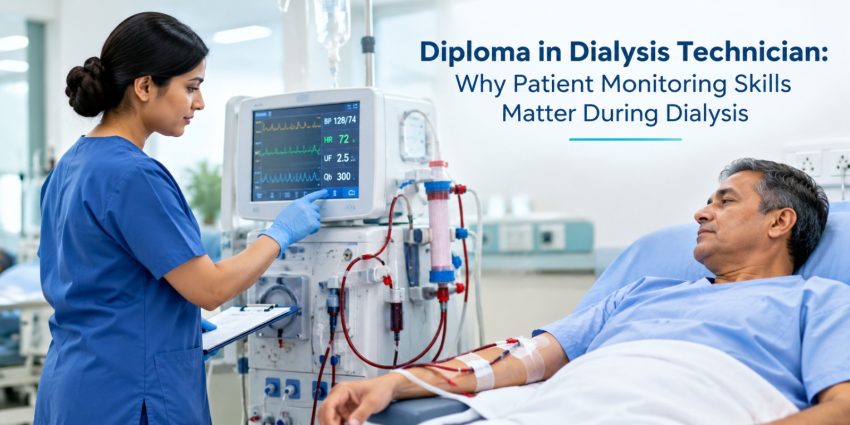
Dialysis is a specialized procedure and type of equipment used to help patients who cannot adequately do the job of their kidneys. Technicians must also have knowledge of dialysis equipment and procedures and acquire skills that enable them to observe and monitor patients during the treatment. A diploma in dialysis technician may enable students to learn theory and hands-on experience around the monitoring and administration of dialysis patients, dealing with equipment and safety measures related to dialysis care.
During Treatment, Check the Patient’s Vital Signs
During dialysis, patients’ blood pressure, heart rate and other vital signs may naturally change. The healthcare team should be kept up to date with patient’s condition by regular monitoring.
Students can acquire knowledge about taking accurate vital signs as part of their professional training, and understand the significance of reporting significant changes to the appropriate health care professional. Such skills need to be developed through detail and adherence to clinical procedures.
It is Important to be Aware of the Patient’s Condition
Patient monitoring is more than just taking numerical readings. Dialysis technicians may also be required to monitor the patient’s overall health and identify signs of change that need to be addressed.
Any symptoms of dizziness, nausea, discomfort or unusual weakness should not be overlooked. A diploma in dialysis technician may include information on the typical changes that can happen during dialysis, and the need to immediately share concerns with the supervising clinical team.
Dialysis Equipment Understanding is Crucial
The monitoring of the dialysis machine and the treatment parameters are closely related to patient monitoring. Technicians should know how to operate equipment and what to look for to determine if there are some alarms or unusual readings.
Practical trainings can help students get used to dialysis machines, monitoring displays, and the procedures used in dialysis. This information enables them to identify situations where observations related to equipment need to be reported to the appropriate healthcare professional.
Maintaining Accurate Records
The other important part of patient monitoring is documentation. Depending on the procedures of the healthcare facility, vital signs, information associated with treatment and relevant observations may be required to be recorded.
Documentation is important for the proper description of the services rendered, and it assists in ensuring good communication among health care professionals. The students will be taught the importance of documentation and confidentiality through training.
Supporting Infection Prevention
Dialysis requires frequent patient interaction, handling of medical devices and biological materials. So, infection control measures are a vital component of a dialysis centre staff member’s job.
Students can learn about hand hygiene, personal protective equipment, equipment disinfection and safe handling of materials. Proper infection control methods minimize the risk of contamination and promote a safer health care environment.
Training for Practical Skills Development
The patient monitoring is a process of theoretical knowledge, observation and practice. A structured diploma programme can provide students with opportunities to learn these skills under appropriate supervision.
Practical experience can enable students to get accustomed to the normal workflow of dialysis facilities and how the dialysis technicians can help the patients.
A diploma in dialysis technician therefore can offer a base for patient monitoring, managing with equipment, and practicing infection prevention and documentation. These skills are applicable to the maintenance of safe and orderly dialysis, and to preparing students for employment in hospitals, dialysis centers, and other health care centers.