
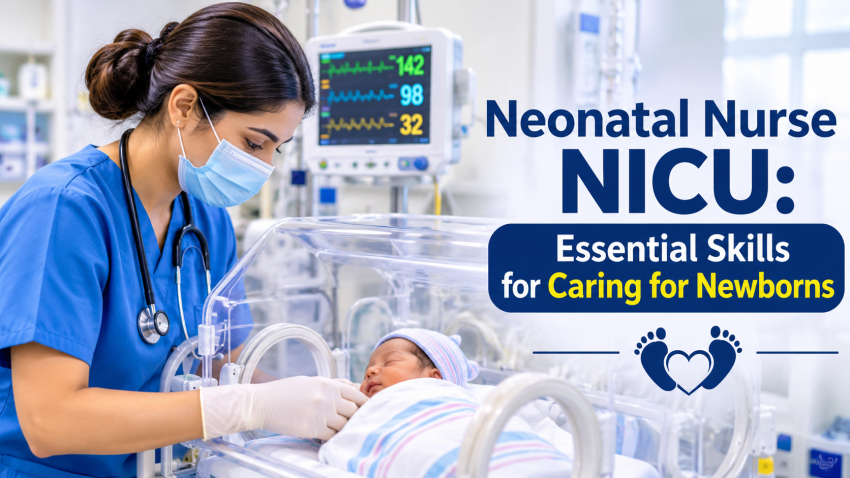
Premier babies who have special medical needs require special care, attention and intervention at the right time and place. It is important for premature infants and infants who are born with medical complications. Neonatal Intensive Care Units (NICUs) are a form of specialized care for these vulnerable newborns, which is carried out by nurses who play a pivotal role in daily care of these newborns. The neonatal nurse NICU professional should be equipped with a multidisciplinary set of skills including clinical knowledge, technical skills, and communication skills, all of which are essential to ensure newborn health and safety is provided.
Understanding the Role of a Neonatal Nurse in the NICU
Neonatal nurses at the ICU are responsible for the care of newborns that require extra medical assistance after being born. Duties may involve checking infant’s vital signs, giving prescribed medication, helping with feeding, keeping infant clean, and watching for changes in the infant.
Premature babies may need to be born with a respiratory support, specific feeding techniques and/or temperature regulation, due to underdeveloped organs. The nurse should be aware of these needs and implement individualized care plans created by the medical team. They are also able to record observations and inform neonatologists and other healthcare workers of their concerns in a timely manner.
Essential Skills for Neonatal Nursing
The neonatal nurse NICU must acquire certain special skills to be able to provide care to the newborn.
Newborn monitoring: Nurses need to evaluate heart rate, breathing, oxygen saturation, temperature and other pertinent clinical parameters. If you can detect some changes, they may signify complications early on.
Regulating temperature: Premature and low-birth-weight infants may have difficulty with maintaining their body temperature. It is important for nurses to be familiar with the correct usage of the incubator and radiant warmers as per clinical procedures.
Breastfeeding support: A few babies need to be breastfed, offered expressed breast milk, or tube fed. Nurses assist to monitor feeding tolerance and to report nutrition or growth concerns.
Infection prevention: Newborns are at the developmental stage of their immune system and hygiene and infection control are important. Hand hygiene, equipment handling, and following clinical precautions are steps taken to minimize infection risks.
Emergency response: Nurses should be able to identify the signs of trouble, including shortness of breath, decreased responsiveness or abnormal vital signs, and report any concerns at once.
Support for Parents in Communicating and Emotionally
The care of the newborn is not clinical alone. Parents may get anxious when their baby needs intensive care, especially if their baby is premature or very unwell.
Nurses assist parents to understand routine care and to explain the procedure within the scope of the nurse’s practice, and encourage parent participation in routine care. They may also provide other practices like kangaroo mother care if clinically appropriate and allowed by the medical team.
Good communication, understanding and respect of family concerns fosters trust. In addition, nurses should ensure the confidentiality of their patients’ information and present it to parents in a manner they can comprehend.
How Specialised Training Prepares Nurses for NICU Care
There is basic nursing knowledge, but there is also knowledge of neonatal care that needs to be learned and practiced under supervision. The following areas should be addressed during a suitable training programme as part of their responsibility: neonatal resuscitation, principles of infection control, support for infant feeding, infant equipment safety, and common neonatal complications.
Nurses should always check the eligibility criteria, course structure, practical exposure and authority recognition of the programme prior to registration. Practical learning in well-supervised environments is especially useful in building confidence in a specialized clinical environment.
Conclusion
A neonatal nurse NICU professional must have clinical judgment, observation, technical knowledge and sensitivity towards communication. These skills are relevant to the safe care of premature and medically at risk newborns. Nurses are able to enhance their skills and knowledge for neonatal care and to assist families during an important time if suitable, specialised training and continued professional development is provided.