
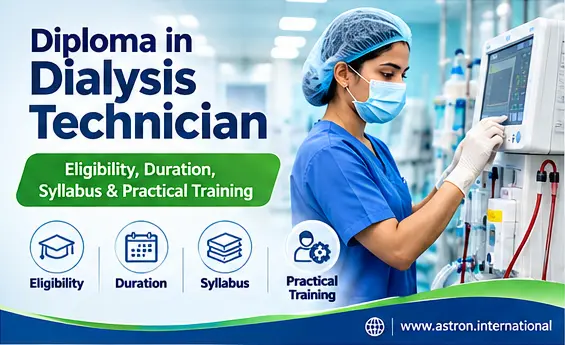
Choosing a healthcare course after Class 12 can be an important step towards developing specialised professional knowledge. For students interested in medical technology, patient care and kidney healthcare, dialysis technology is an educational pathway worth exploring.
A Diploma in Dialysis Technician introduces students to dialysis equipment, renal healthcare, patient safety and the technical responsibilities associated with dialysis treatment.
Dialysis technicians work alongside nephrologists, nurses and other healthcare professionals to support patients receiving dialysis. Their responsibilities require technical understanding, attention to detail and effective communication.
If you are considering a career in allied healthcare, understanding the eligibility requirements, curriculum and practical training components of a dialysis technician course can help you make an informed educational decision.
What Is a Diploma in Dialysis Technician?
A Diploma in Dialysis Technician is a specialised healthcare education programme that teaches students about kidney function, dialysis technology, medical equipment and patient care support.
The programme prepares learners to understand the technical aspects of dialysis services and the responsibilities of professionals working within a nephrology team.
At Astron Institute of International Studies (AIIS), the diploma combines academic education with workplace-based training to support the development of relevant healthcare knowledge and technical skills.
What Does a Dialysis Technician Do?
A dialysis technician provides technical assistance to healthcare teams involved in dialysis treatment.
Haemodialysis uses specialised equipment to filter waste products and excess fluid from the blood when the kidneys can no longer perform these functions adequately.
According to the National Institute of Diabetes and Digestive and Kidney Diseases, haemodialysis helps replace certain functions of the kidneys but does not cure kidney failure.
Depending on their qualifications and authorised responsibilities, dialysis technicians may assist with:
- Preparing dialysis equipment for treatment sessions.
- Checking equipment functionality and readiness.
- Supporting patient preparation and monitoring.
- Following infection prevention procedures.
- Maintaining equipment and treatment-related records.
- Reporting equipment concerns or changes in patient condition.
- Coordinating with nurses and nephrologists.
- Supporting a safe and organised dialysis environment.
Dialysis technicians perform their responsibilities according to established clinical protocols and appropriate professional supervision.
Diploma in Dialysis Technician: Course Overview
Astron International offers a Diploma in Dialysis Technology for eligible students interested in developing knowledge of renal healthcare and dialysis equipment.
| Course Details | Information |
| Programme | Diploma in Dialysis Technology |
| Institute | Astron Institute of International Studies |
| Total Duration | 1 Year |
| Theoretical Education | 9 Months |
| On-the-Job Training | 3 Months |
| Educational Qualification | Class 12 – Any Stream |
| Learning Approach | Academic learning and practical training |
| Certification | Astron Institute of International Studies |
Candidates should contact the admissions team to confirm current admission requirements and practical training arrangements.
Diploma in Dialysis Technician Eligibility After 12th
Students interested in dialysis technology should review the educational requirements of their chosen institution before applying.
Astron International lists the following eligibility criteria for its Diploma in Dialysis Technology:
- Completion of Class 12 from any stream.
- At least 40% marks in English at the 10+2 level.
- Foundational computer proficiency, including Microsoft Office.
This programme may interest students from different educational backgrounds who want to explore technical healthcare education.
However, admission eligibility and eligibility for professional registration or employment are separate matters. Students should verify the requirements applicable to their intended healthcare role before enrolling.
Diploma in Dialysis Technician Course Duration
The Diploma in Dialysis Technology at Astron International is a one-year programme consisting of nine months of theoretical education and three months of on-the-job training.
Theoretical Education
The academic component introduces students to medical terminology, human anatomy, kidney function, dialysis technology and healthcare safety. Students develop foundational knowledge before progressing to practical learning.
On-the-Job Training
The practical component provides learners with exposure to workplace requirements, equipment management and professional responsibilities within a healthcare environment. This combination helps students understand how academic concepts relate to the technical activities performed in dialysis units.
What Is Included in the Dialysis Technician Course Syllabus?
A dialysis technician programme covers subjects related to human health, renal care, medical equipment and professional healthcare responsibilities. The curriculum at Astron International includes the following learning areas.
Human Anatomy and Physiology
Students study the structure and functions of the human body, building a foundation for understanding kidney function and renal healthcare.
Medical Terminology
Understanding commonly used healthcare terms helps learners communicate with medical professionals and interpret relevant academic and workplace documentation.
Principles of Dialysis
This subject introduces the scientific concepts behind dialysis and its purpose in supporting patients with impaired kidney function.
Dialysis Procedures
Students learn about the broader treatment environment, the role of the dialysis team and the importance of following established clinical procedures.
Haemodialysis Technology
This learning area focuses on the technology used in haemodialysis and the technical responsibilities associated with dialysis equipment.
Equipment Maintenance
Learners develop an understanding of equipment care, functionality checks and the importance of appropriate maintenance practices.
Patient Safety and Quality Assurance
Students explore healthcare safety principles, infection prevention awareness, documentation and quality-related responsibilities within a dialysis unit.
Computer Applications in Healthcare
Computer knowledge supports healthcare documentation, equipment records and other administrative responsibilities.
Medical Law and Bioethics
This subject introduces professional conduct, patient confidentiality, ethical responsibilities and the importance of respecting individual rights.
Together, these subjects provide an educational foundation for understanding the technical and patient-centred aspects of dialysis services.
Why Is Practical Training Important in a Dialysis Technician Course?
Dialysis technology involves specialised medical equipment and direct interaction with patients. Theoretical education is important, but supervised practical learning helps students understand how healthcare knowledge relates to workplace responsibilities.
Practical training can provide opportunities to develop familiarity with:
- Dialysis equipment and its components.
- Healthcare equipment maintenance requirements.
- Patient preparation and observation.
- Infection prevention and workplace safety.
- Clinical documentation practices.
- Communication within a healthcare team.
Students must work within their authorised responsibilities and under suitable supervision during practical training.
Before enrolling, candidates should ask the institution about training locations, supervision arrangements and competency assessments.
Learners can also explore our guide on why patient monitoring skills matter during dialysis to understand this important aspect of dialysis care.
Essential Skills Required for a Dialysis Technician
Successful learning in dialysis technology requires more than understanding medical equipment. Students should also focus on developing professional and interpersonal abilities.
Technical Understanding
Dialysis technicians need familiarity with specialised equipment and the ability to recognise and communicate technical concerns.
Attention to Detail
Accurate documentation, equipment readiness and careful observation are important aspects of working in a dialysis environment.
Patient Communication
Patients receiving dialysis may experience physical discomfort or emotional concerns. Respectful communication can help support a more comfortable healthcare experience.
Infection Prevention Awareness
Understanding infection prevention principles is essential when working with medical equipment and supporting patients in healthcare facilities.
Teamwork
Dialysis technicians work alongside different healthcare professionals. Effective teamwork supports coordination and appropriate communication.
Professional Responsibility
Maintaining patient confidentiality, following workplace protocols and recognising professional boundaries are essential responsibilities in healthcare.
Can You Pursue a Dialysis Technician Course Online?
Some dialysis technology programmes combine digital academic learning with supervised practical training. Online learning can support the study of subjects such as anatomy, physiology, medical terminology and theoretical concepts of dialysis.
However, online education alone should not be considered a substitute for practical clinical training where hands-on competencies are required.
Students comparing different dialysis tech courses should review how theoretical education, practical experience and competency assessments are integrated into the programme.
Career Opportunities After a Diploma in Dialysis Technician
Dialysis technology education can provide a foundation for exploring relevant roles within renal healthcare services.
Depending on their qualifications, practical experience, professional registration and employer requirements, individuals may explore opportunities in:
- Hospital dialysis departments.
- Specialised dialysis centres.
- Nephrology departments.
- Multispecialty hospitals.
- Renal healthcare facilities.
- Relevant healthcare equipment support services.
Students can read more about career paths after completing a Diploma in Dialysis Technician to explore different professional development possibilities.
Completing a diploma does not independently guarantee employment or professional registration. Candidates should verify the recognition and suitability of their qualification for their intended role.
How to Choose the Right Dialysis Technician Course After 12th
Before applying for a dialysis technology programme, students should carefully compare the available educational options.
- Eligibility requirements: Check whether your educational qualifications meet the admission criteria.
- Course curriculum: Review the subjects covered and their relevance to dialysis technology.
- Practical training: Understand where and how supervised training is conducted.
- Learning resources: Evaluate the academic material and faculty interaction available.
- Certification: Confirm the awarding institution and assessment requirements.
- Professional recognition: Verify whether the qualification meets applicable registration and employment requirements.
Considering these factors can help students select a programme that aligns with their educational background and professional objectives.
Why Explore Dialysis Technology at Astron International?
Astron Institute of International Studies offers healthcare education programmes that focus on specialised knowledge and professional development.
Its Diploma in Dialysis Technology includes academic resources, expert-led learning activities, assignments, project work and practical training.
The programme introduces students to dialysis technology, equipment management, patient safety and the importance of coordinated healthcare services.
Students interested in other healthcare specialisations can also explore the institute’s paramedical diploma programmes to compare available educational pathways.
Conclusion
A Diploma in Dialysis Technician after Class 12 can be an educational option for students interested in medical technology and kidney healthcare.
By studying subjects such as anatomy, dialysis principles, equipment maintenance, patient safety and medical ethics, learners can build foundational knowledge relevant to renal healthcare services.
Combining academic education with appropriate supervised practical training is an important consideration when choosing a dialysis technology programme.
Astron International offers a one-year Diploma in Dialysis Technology for eligible students interested in exploring this specialised area of healthcare.
Take the Next Step Towards Healthcare Education
Interested in learning about dialysis technology and renal healthcare?
Explore the Diploma in Dialysis Technology at Astron Institute of International Studies. Connect with our admissions team to learn more about programme eligibility, curriculum, practical training and certification.
Explore the Dialysis Technician Course
Admission Enquiries: +91-8800893636
Frequently Asked Questions (FAQs)
1. What is a Diploma in Dialysis Technician?
A Diploma in Dialysis Technician is a specialised healthcare programme that introduces students to dialysis technology, kidney function, medical equipment, patient safety and renal healthcare support.
2. What is the eligibility for a Diploma in Dialysis Technician at Astron International?
Astron International lists Class 12 from any stream, a minimum of 40% marks in English at the 10+2 level and basic computer knowledge as its admission eligibility requirements.
3. What is the duration of the Dialysis Technician course at Astron International?
The Diploma in Dialysis Technology at Astron International is a one-year programme comprising nine months of theoretical education and three months of on-the-job training.
4. Can I pursue a dialysis technician course after 12th Arts or Commerce?
Yes. Astron International lists Class 12 from any stream among its admission criteria. Candidates must also meet the additional eligibility requirements and verify applicable professional requirements for their intended role.
5. What subjects are covered in a dialysis technician course?
The curriculum includes anatomy, physiology, medical terminology, dialysis principles, dialysis procedures, haemodialysis technology, equipment maintenance, patient safety, computer applications and medical ethics.
6. Does Astron International provide practical training in dialysis technology?
Yes. The published one-year Diploma in Dialysis Technology includes three months of on-the-job training. Candidates should confirm specific training arrangements with the admissions team.
7. Can I become a dialysis technician through online learning alone?
Online learning can support theoretical education, but appropriate supervised practical training and applicable professional competencies are important for clinical dialysis technician roles.
8. What skills are important for a dialysis technician?
Important skills include technical understanding, attention to detail, patient communication, infection prevention awareness, teamwork and accurate healthcare documentation.
9. Where can dialysis technicians work?
Depending on their qualifications and applicable professional requirements, dialysis technicians may explore relevant roles in hospitals, specialised dialysis centres, nephrology departments and renal healthcare facilities.
10. How can I apply for a Diploma in Dialysis Technician at Astron International?
Interested candidates can visit the official Astron International dialysis technician course page or contact the admissions team for information about eligibility, application procedures, practical training and admission schedules.