
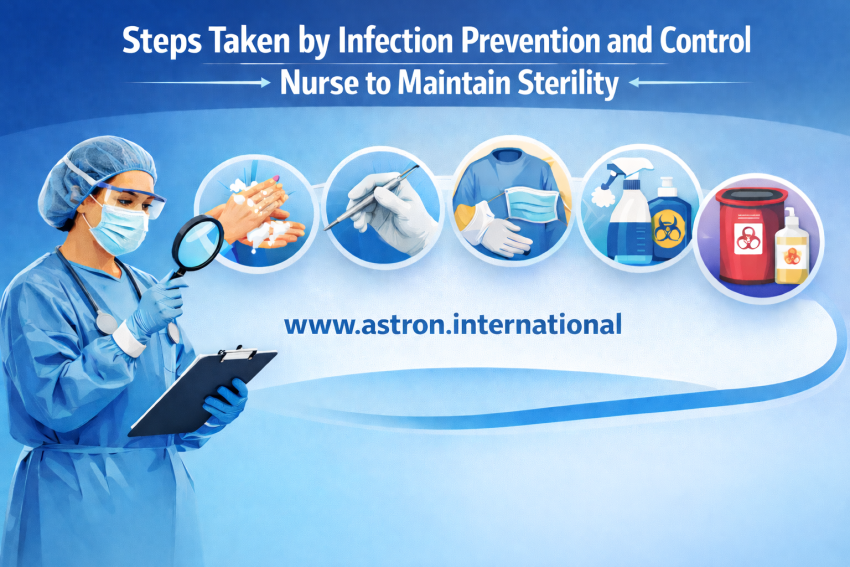
Sterility is an important practice in healthcare facilities to provide patient safety and avoid infection. Hospitals are involved with a large variety of patients, some of whom have weakened immune systems, and infection control is one of the highest priorities. An infection prevention and control nurse is one of the persons who handle much of this responsibility, and they are instrumental in maintaining the healthcare environment to be safe and hygienic.
A nurse in charge of infection prevention and control abides by strict protocols and guidelines to minimize chances of contamination. Their activities include constant monitoring, training and application of best practices to ensure that all departments are sterile.
Understanding Sterility Standards
The initial action undertaken by an infection prevention and control nurse is to make sure that all hospital personnel is made aware of the value of sterility. This involves informing teams of the risk of infections, correct hygiene routines and routine precautions.
With clear guidelines, the nurse can make sure that all people in the healthcare facility approach things in a similar manner. This is the basis of ensuring sterile environment.
Monitoring Hand Hygiene Practices
One of the easiest, but most effective methods of preventing infections is hand hygiene. The infection prevention and control nurse makes sure that the healthcare workers adopt appropriate handwashing methods and sanitizers where necessary.
Audits and observation are regularly done to ensure compliance. The nurse assists in cutting down the transmission of pathogenic microorganisms in the hospital by strengthening these practices.
Ensuring Appropriate Use of Personal Protective Equipment (PPE)
To avoid contamination, personal protective equipment like face shields, mask, gowns, and gloves are necessary. The nurse in charge of infection prevention and control makes sure that staff members wear PPE properly and regularly.
They also provide information to staff members on how and when to use certain protective equipment based on the circumstances. Proper disposal of the used PPE is also important and it is closely observed.
Maintaining Sterilization of Equipment
Medical equipment and instruments should be correctly sterilized. A nurse in charge of the sterilization process is an infection prevention and control nurse who pays attention to the fact that all the tools are up to the standards.
This involves the checking of autoclave procedures, tracking of sterilization cycles and proper storage of equipment after sterilization. Any failure in this process may lead to higher chances of infection and thus close supervision is essential.
Installing Cleaning and Disinfection Procedures
Frequent cleaning and disinfection of hospital surfaces is important in ensuring sterility. As an infection prevention and control nurse, one of the functions is to create and implement cleaning schedules in various units such as operation theatres, ICUs and patient rooms.
Special attention is paid to high-touch surfaces like door handles, bed rails, and medical equipment. The nurse makes sure that the appropriate disinfectants are applied and that cleaning personnel is properly trained.
Safe Waste Disposal
Biomedical waste may be a strong source of infection when not managed appropriately. An infection prevention and control nurse makes sure that the waste is separated, managed and disposed as per safety requirements.
This involves labeling, use of specific containers and liaising with the waste management systems. Proper disposal will be used to avoid contamination inside and outside the hospital.
Regular Training and Audits
Sterility standards need to be high and therefore continuous training is necessary. A nurse who is in charge of preventing and controlling infections within the hospital will schedule regular sessions where the staff will be updated on best practices and new guidelines.
Moreover, the routine audits are also taken to evaluate the adherence to infection control measures. These audits aid in detecting loopholes, and enhancing the current systems.
Reactions to Infection Risks
Although everything is taken care of, there might be cases when the risk of infection occurs. It is the task of an infection prevention and control nurse to spot such risks at their earliest stage and address them.
This can involve isolating patients, auditing procedures and putting in place other safety measures. Rapid reaction aids to contain possible outbreaks and preserve the overall sterility.
Conclusion
Sterility in the healthcare environment takes a lot of work and stringent measures to follow protocols. An infection prevention and control nurse plays a main role of ensuring that such standards are met at all times.