
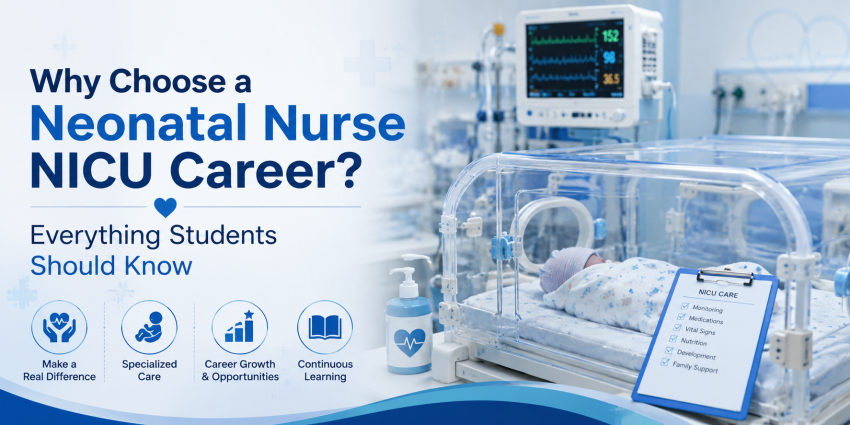
Neonatal nursing is the perfect profession for students who seek to blend clinical skills with empathy, patience, and specialization. The role of nurses in the neonatal intensive care unit (NICU) involves taking care of preterm infants and other newborns in need of intensive monitoring and medical care. Being a neonatal nurse NICU is a job that requires effort and passion since you can contribute a lot in the early stage of life.
What Does a Neonatal Nurse Do?
A neonatal nurse is responsible for providing specialized nursing care to infants that may require medical attention.
Caring for Infants
Nurses working in the NICU keep track of their vitals, administer medication, assist in performing certain procedures, ensure the feeding schedule and look out for any changes in the health status of the babies. Often, these nurses collaborate with neonatologists, pediatricians, respiratory therapists and others.
Helping the Families of Babies in the NICU
Not only do these nurses offer medical assistance. The parents of babies in critical condition may have many worries and questions, which the nurses need to address.
Why Consider a Neonatal Nurse NICU Career?
Here is what a choice of this specialization can offer.
Clinical Knowledge and Skills
Nurses that work in an NICU get familiar with advanced medical technology, neonatal monitoring, respiratory care, medication administration, and specialized procedures. All of this helps to develop nurses’ clinical knowledge and decision-making skills.
Professional Satisfaction
Even minor progress of newborn’s health can be viewed as an achievement. Nurses who are involved in such treatment process can feel satisfaction from their work and get a clear understanding of the purpose.
Career Prospects
This specialization opens various career opportunities in the field of healthcare for nurses in the future. Nurses can become advanced registered nurses, educate neonatal, conduct research, engage in healthcare leadership, or any other specialized work.
Skills Students Should Develop
Students interested in this field should focus on more than academic knowledge.
Clinical and Technical Skills
Observation, precision, medication safety, infection control, and technical skills for working with specific instruments are highly important in neonatal practice.
Communication and Emotional Management
Working in NICU can be challenging. For nurses to succeed in it, they need strong communication, emotional stability, and the ability to adapt to the changing situation.
Educational Requirements
The first step that students need to take is to get an adequate education in nursing as well as getting registered in the particular region. There are additional educational options for nurses to improve their skills in neonatal care.
Is This Career Right for You?
A neonatal nurse NICU pathway would be appropriate for individuals who have an interest in healthcare, attention to detail, and a passion for working with babies and families. But it is essential that students are also aware of the fact that NICU nursing comes with its challenges as well.
Making the Smart Career Decision
Students must gather as much information as possible on what this specialty requires in terms of education and practical experience before pursuing this career path. Talking to professional neonatal nurses will give you an insight into the field.
Conclusion
Neonatal Nurse NICU is a profession that blends health expertise with empathy and meaning. For the student willing to learn clinical skills and manage tough scenarios, neonatal nursing is a health profession that could prove very satisfying.